

Neck Pain Treatment in Norwest & Dural
The Short Version
Most neck pain is not caused by damage and settles well. Posture matters less than people are told and capacity matters more. Keeping the neck moving beats resting it, and the rebuild that stops it returning takes longer than the pain does. Headache coming from the neck is common and often responds within the first few sessions. Get assessed promptly if you have arm weakness, numbness or pins and needles that is getting worse, or neck pain following a significant injury.
The Neck We See Most
Someone who woke up with a stiff neck they cannot turn, or a desk worker whose neck and upper shoulder have ached for months and now brings on headaches by mid afternoon. They usually describe it as tension and have been stretching it without much change. Stretching a neck that is already irritable and under loaded rarely fixes it.
Do You Need a Scan?
Usually not. Neck pain is diagnosed clinically, and degenerative changes appear on the scans of most people over forty who have no symptoms at all. Finding them does not establish that they are the cause. We would refer for imaging if there was significant trauma, if there is arm weakness, numbness or reflex loss that is progressing, if there are red flags such as unexplained weight loss, fever or a history of cancer, or if you have had a proper trial of treatment without the response we would expect.
Whether you need imaging is something we work out with you at the appointment, based on what your neck's doing and what we find when we examine you. Your practitioner will talk you through whether a scan would change anything, and organise it if it would.
When You Should Be Seen Urgently
A few neck presentations need looking at faster, and one group needs the emergency department rather than us. If any of these fit, tell us when you book.
Go to emergency if you’ve had a significant fall, crash or blow to the head or neck, especially if there’s midline tenderness or you can’t turn your head. Also if the neck pain came on with a sudden severe headache unlike any you’ve had before.
Go to emergency, and don’t wait to see us, if neck pain comes with any of these: dizziness or vertigo that’s new, double vision, slurred speech, trouble swallowing, numbness around the face or mouth, or sudden loss of balance. These can point to a problem with the blood vessels in the neck rather than the joints, and they change the plan completely.
Book in with us soon, and tell us when you book, if you’ve got arm weakness, numbness or pins and needles that’s getting worse rather than better. If you’re noticing clumsiness in your hands, dropping things, trouble with buttons or keys, or a change in how you walk, because that combination needs assessing properly. If there’s fever, unexplained weight loss, or you’ve had cancer. Or if you’ve had a proper go at treatment and it’s not responding the way we’d expect.
If none of that sounds like your neck, you’re in the right place, and the rest of this page is what we’d do about it.

What's Actually Driving Your Neck Pain
Neck pain is rarely caused by damage. These are the six patterns behind almost every case we see.
Sustained postures, not bad posture
Sleep, stress and workload
The deep neck muscles have stopped working
Load the mid back and shoulders should carry
A neck that has never been trained for the load
Long hours in one position without a break
How We Actually Treat It
What we do depends on what your neck is actually doing. A neck that’s acutely locked up after a bad night’s sleep and a neck that’s ached for three years at a desk need different first appointments, and pretending otherwise is how people end up on a generic six week plan that doesn’t fit them.
What doesn’t change is the shape of it. Hands on work, dry needling and joint mobilisation are genuinely useful, particularly early and particularly for headache coming from the neck. What they buy you is a window, a stretch of time where the neck is less irritable and moves more freely than it did. That window is real and it’s worth having. It just closes again on its own if nothing else changes.
What we do inside that window is the part that lasts. The deep neck muscles stop doing their share when a neck’s been sore for a while, and the mid back and shoulder blades stop carrying load they should be carrying. Building that back is what raises the amount your neck can tolerate before it complains: more hours at a desk, more time under a bar, more of whatever it is you’ve been avoiding. It’s unglamorous, it takes weeks rather than days, and it’s what decides whether you’re back here in six months.
On posture: it matters less than you’ve been told. Sustained positions are the problem far more often than any particular position. A neck that’s strong enough tolerates a desk. A neck that isn’t, doesn’t, no matter how the chair is set up.
What Recovery Actually Looks Like
Week one to two. Most acute stiff necks ease substantially in this window. The aim isn’t to be pain free, it’s to get range back and keep moving. If you’ve got headache coming from the neck, that often improves in the first few sessions, which is a useful early sign.
Weeks two to six. Pain settles for most people. This is where the strength work starts to matter more than the hands on work, and where a lot of people stop because they feel fine.
Weeks six to twelve. The rebuild. Deep neck strength, mid back, shoulder blades. Less dramatic than the first fortnight and more important.
Nerve related arm symptoms run on a slower clock. Six to twelve weeks is normal rather than a sign something’s wrong, and improvement usually shows up as the pain retreating up the arm towards the neck before it goes entirely.
What Else It Could Be
Neck pain tells us where it hurts. Sorting out what’s actually going on is what the first appointment is for.
Cervicogenic headache. Headache that starts at the base of the skull and comes forward, usually one sided, often with neck stiffness. Common, under diagnosed, and it responds well.
Nerve root irritation. Pain travelling into the arm in a defined strip, often with pins and needles or numbness. Slower to settle, different plan.
Referred pain from the mid back or shoulder. A neck that doesn’t behave like a neck is worth checking either side of.
Whiplash after a car accident. Behaves differently again and often has a claim attached to it.
Worth knowing about scans. Wear and tear on a neck scan is close to universal in people with no neck symptoms at all, including most people in their twenties. Finding it tells you roughly how old the neck is. It does not tell you why it hurts.
Related pages: Whiplash, Shoulder Pain, Carpal Tunnel.
Related pages: Whiplash, Shoulder Pain, Carpal Tunnel.
Frequently Asked Questions
How long will my neck pain take to settle? Most acute necks ease a lot within one to two weeks. Getting the strength back so it stays settled takes closer to two to three months. If there's arm pain involved it's slower, and six to twelve weeks is normal rather than a bad sign.
Is my posture causing this? Less than you've been told. Sustained positions are a bigger problem than any specific position, and a neck with enough capacity tolerates a desk job fine. We'd rather change what your neck can handle than rearrange your workstation and hope.
Should I keep stretching it? Stretching gives short term relief and that's fine, but if months of stretching hasn't changed anything, more stretching won't either. The thing that changes it is loading, and that's a different exercise entirely.
Is it safe to have my neck adjusted? It's a fair question and worth asking. We assess for the specific things that would make manual work on a neck a bad idea before we do any, and we'll tell you if we're not comfortable. There are also plenty of ways to treat a neck that don't involve adjusting it, and we use those routinely.
Does the wear and tear on my scan mean it'll keep getting worse? No. In a study of over 1,200 people with no neck symptoms, nearly 88 percent had disc bulging on MRI, including most people in their twenties. It tells you roughly how old the neck is. It does not tell you how it will feel.
Do I need a referral to book? No. You can book directly with any of our chiropractors or physiotherapists. If you've got a GP care plan or you're claiming through a fund, bring the paperwork and we'll work with it.
Who Treats This at Strive
Neck pain and cervicogenic headache are treated at both clinics by our chiropractors and physiotherapists. Who you see depends on your presentation, and we will move you internally if someone on the team is a better fit.

Tammy Ong
Women’s Health Physiotherapist
Rehabilitation Pilates Instructor
Tammy helps women and active individuals recover from injury, improve movement, and return to the activities they love.

Warren Zhou
Chiropractor, competitive powerlifter, and trail runner who treats athletes from the gym floor to the platform to the start line.

Tegan Webster
Chiropractor
Providing evidence-based care to help patients achieve their health goals.

Richard Kan
Sports Chiropractor
Strength and Conditioning Coach
Helping athletes and active individuals recover, perform, and stay injury-free.

Rawan Haydar
Physiotherapist
Passionate about personalised care that supports recovery and long-term wellbeing.
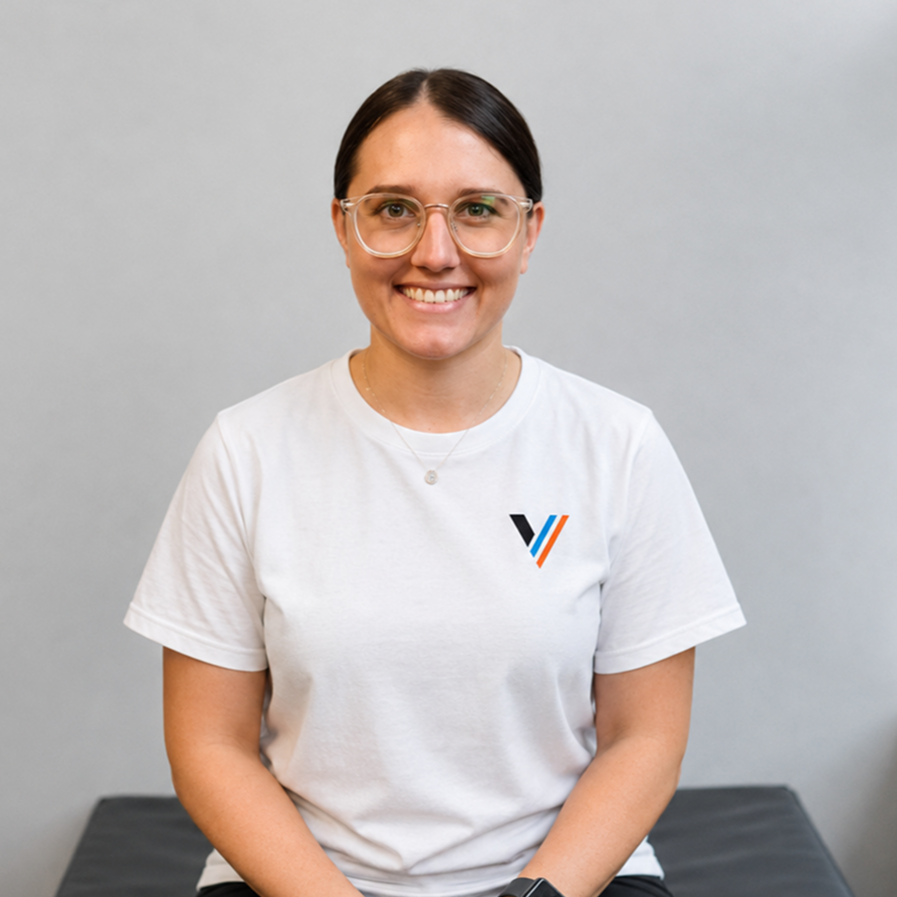
Jess Larder
Physiotherapist
Passionate about rehabilitation, movement, and helping people achieve their goals.
Getting Here
We treat neck pain and headaches at both our Norwest and Dural clinics.
Norwest
301/10 Century Circuit NORWEST NSW 2153
Inside Norwest Central Building Complex - 8 - 12 Century Circuit
Entry doors next to Zaatar and Zucchero Cafe
Operating Hours
Mon - Fri 8am - 6pm
Sat 8am - 12pm
Sun CLOSED

Ready to Sort Your Neck Out?
We see patients with neck pain and headaches from across The Hills, including Dural, Round Corner, Kenthurst, Glenhaven, Castle Hill, Kellyville, Baulkham Hills, Cherrybrook and Bella Vista, at our Norwest and Dural clinics, and in Canberra at Giralang. Book online or call and we will get you assessed.