
Knee Replacement Rehab in Norwest & Dural
The Short Version
A knee replacement gives you a new joint. It does not give you back the strength you lost in the years of limping before it. That part is rehab, and it is the part that decides whether you are happy with the result. The first six weeks are about range of motion and swelling, and getting your knee straight matters more than most people are told. After that it is a strength project that runs for months, not weeks. Most people are discharged from formal physio long before their leg has caught up, which is the single most common reason someone is disappointed a year later.
Where You Are Right Now
Most people find us at one of three points.
Before the operation, wanting to go in as strong as possible. That’s worth doing and there’s evidence behind it, though not the evidence you might expect.
In the first six to twelve weeks, when the knee is stiff and swollen, progress feels slow, and it’s hard to know what’s normal. This is where most of the phone calls come from and most of them are about pain and swelling that turn out to be entirely expected.
Three to twelve months out, when the knee works but doesn’t feel like yours. Stairs are still awkward, kneeling is off the table, and the strength isn’t back. This is a legitimate place to start rehab, not a sign you’ve missed the boat.
When to Ring Someone Today
Ring your surgeon’s rooms or go to emergency the same day if you’ve got a fever, the wound is red, hot, opening or leaking, or the knee has become suddenly and dramatically more painful and swollen after settling. Infection in a replaced joint is uncommon and it’s treated as urgent.
Go to emergency if you get calf pain and swelling, especially in one leg, or if you become short of breath or get chest pain.
Also go to emergency if the knee gives way completely, if you hear or feel a clunk followed by inability to weight bear, or if you have new numbness or a foot that’s gone cold.
Ring us, and we’ll tell you if it needs escalating, if your range of movement is going backwards rather than forwards, if the pain is waking you every night beyond the first few weeks, or if you’re at six weeks and can’t get the knee fully straight.
Pain, swelling, warmth, bruising down the shin, and a knee that hates stairs are all expected in the early weeks and don’t need a phone call.
What Your Surgeon’s Restrictions Actually Mean
Surgeons vary and yours takes precedence over anything on this page. Bring your protocol to the first appointment and we’ll work inside it. That said, here’s what the common instructions actually mean day to day.
“Weight bear as tolerated.” Put as much weight through it as you can manage without limping badly. Use the frame or crutches until you can walk without a limp, then drop to one, then none. The goal is a normal walking pattern, not the earliest possible discard of the crutches. Limping for weeks teaches you a habit that takes months to unlearn.
“Get it fully straight.” This is the most important instruction you’ll be given and the one most often underestimated. A knee that doesn’t fully straighten by around six weeks tends not to, and it changes how you walk permanently. If straightening is going backwards, that’s a phone call.
“Aim for 90 degrees by six weeks.” A rough benchmark for getting on and off chairs and in and out of a car. Most people are past it. Bend usually keeps improving for months, so being slightly behind at six weeks is not a disaster.
“No kneeling.” Usually about comfort and the scar rather than damage. Many people never comfortably kneel again on a replaced knee and that’s a known outcome rather than something going wrong.
“No high impact.” Running, jumping and contact sport are generally discouraged long term because of wear on the implant. Walking, cycling, swimming, golf and doubles tennis are usually fine. Ask your surgeon about your specific joint.
On driving. There’s no single evidence-based number for knees. Braking performance is measurably impaired for the first few weeks and usually back to normal around six weeks, but the studies deliberately avoid giving one threshold because it depends on which leg, what car and how you’re recovering. Check with your surgeon, and check with your insurer, because they may have their own rule.

What Actually Determines Your Result
The surgery is one day. These are the six things over the following year that decide how good the outcome is.
Getting the knee fully straight, early
What happens after week twelve
Quadriceps strength
What you did before the operation
Stopping rehab when the pain settles
Not getting the knee fully straight early
How Rehab Actually Works
Rehab works by rebuilding strength while the tissues around your new knee regain their capacity to handle load. Those two things happen on different clocks, and the job is to keep them lined up.
In the first weeks the knee is healing and swollen, and the priority is movement, getting it fully straight, and waking the quadriceps back up. Push too hard here and you set the swelling back. Do too little and you lose range you won’t easily get again.
From there it becomes a loading problem rather than a healing one. Each phase asks a bit more of the knee than the last, and the point of a guided program is that you only move to the next one when the leg can actually handle it. That is what protects you from the swelling and stiffness that come with doing too much too soon, from the limp that sets in when you get comfortable walking badly, and from arriving at twelve months with a knee that moves fine but still can’t manage stairs or get you out of a low chair.
The mechanism is progressive overload. Small, planned increases in what the leg is asked to do, week after week, so the muscle and the tissue adapt instead of flaring. It isn’t dramatic and it isn’t quick, and it’s the entire difference between a knee that works and a knee that merely stopped hurting.
What we do is set that program up, measure both legs so we’re working off numbers rather than how it feels, check you’re hitting the milestones that matter, and progress the load as you earn it.
On prehab. If you’re not operated on yet, getting stronger beforehand is genuinely worth doing. You go in with more to lose, and the first three months are faster and easier for it.
The goal isn’t the operation. It’s getting you back to living with your new knee.
What Recovery Actually Looks Like
The below is a rough guideline on what to expect. Results vary depending on your health status, how your healing progresses, and the type of surgery you had.
Weeks zero to six. Swelling, stiffness, and getting the knee fully straight. Walking without a limp is the goal, not walking without aids.
Weeks six to twelve. Strength and normal walking. Stairs start to come good. Most people stop needing the walking aid in here.
Months three to six. The biggest functional gains. Cycling, longer walks, getting off low chairs without using your hands.
Months six to twelve. Slower but real improvement. Strength keeps building well after the knee stops feeling swollen, and this is the stretch that decides how the knee feels at a year.
Most of the change happens in the first six months, and the work you do in months three to twelve is what turns a knee that has stopped hurting into one you stop thinking about.
What the Evidence Says About Getting a Good Result
A few things genuinely predict how people do, and they’re not the ones people focus on.
How much pain you had before the operation. This is the most consistent predictor of how much pain you have afterwards. Operating on a knee earlier in its course tends to produce a better result than operating on one that has been agony for five years.
Pain somewhere else. People with pain at multiple sites do less well after a knee replacement. That’s not a reason not to have one; it’s a reason to treat the other things too.
Mood and pain catastrophising. Depression, anxiety and a tendency to expect the worst about pain all predict a worse outcome, and they showed up as independent predictors after adjusting for everything else. This is one of the few areas where addressing something other than the knee measurably changes the knee result.
What doesn’t predict much: managing expectations. It gets talked about as the key to satisfaction, and when it has actually been tested it hasn’t held up.
And what we can’t tell you: how much sticking to the rehab program changes the outcome. It’s plausibly important. There’s no good number attached to it, and we’d rather say that than invent one.
Related pages: Knee Pain, Meniscus Tear, Total Hip Replacement Rehab.
Frequently Asked Questions
How long until I feel normal? Most of the gain happens in the first six months, with real but slower improvement to twelve. After twelve months the data shows a plateau, so if you're a year out and still struggling, that's a reason to do something rather than wait.
Is this much pain and swelling normal? In the first six to twelve weeks, almost certainly. Swelling that comes and goes with activity, a knee that hates stairs, and bruising down the shin are all expected. What isn't normal is fever, a wound that's red or leaking, calf pain and swelling, or range of movement going backwards. Those are phone calls.
Do I need supervised physio or can I do it at home? On the evidence, a well-designed home program does as well as outpatient physiotherapy, including in patients specifically identified as being at risk of a poor outcome. What matters is having a proper program, hitting the milestones, and someone checking.
When can I drive? There's no single evidence-based number for knee replacements. Braking is measurably slower for the first few weeks and usually back to normal around six weeks. Check with your surgeon and with your insurer, because they may have a rule of their own.
Will I be able to run again? Probably not, and most surgeons advise against it because of implant wear. In one study of 4,462 joint replacement patients, only 5 percent of people who ran before a knee replacement returned to running. Cycling, swimming, walking, golf and doubles tennis are usually fine.
Do I need a referral to book? No. You can book directly with any of our chiropractors or physiotherapists. Bring your surgeon's protocol and any restrictions and we'll work inside them.
Who Treats This at Strive
Knee replacement rehab at Strive is run by our physiotherapists and chiropractors with strength and conditioning built in rather than bolted on. We work within your surgeon’s protocol, and we do the strength work that decides your twelve month result.

Tammy Ong
Women’s Health Physiotherapist
Rehabilitation Pilates Instructor
Tammy helps women and active individuals recover from injury, improve movement, and return to the activities they love.

Warren Zhou
Chiropractor, competitive powerlifter, and trail runner who treats athletes from the gym floor to the platform to the start line.

Tegan Webster
Chiropractor
Providing evidence-based care to help patients achieve their health goals.
Richard Kan
Sports Chiropractor
Strength and Conditioning Coach
Helping athletes and active individuals recover, perform, and stay injury-free.

Rawan Haydar
Physiotherapist
Passionate about personalised care that supports recovery and long-term wellbeing.
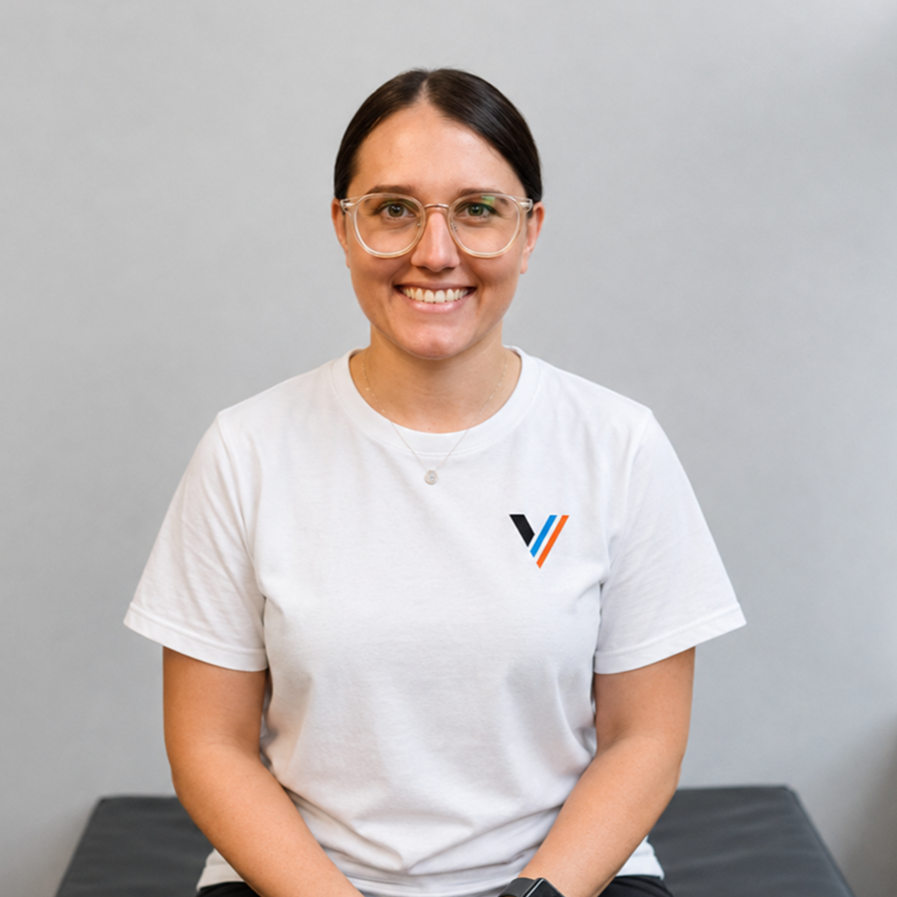
Jess Larder
Physiotherapist
Passionate about rehabilitation, movement, and helping people achieve their goals.
Getting Here
We treat knee replacement patients at both our Norwest and Dural clinics.
Norwest
301/10 Century Circuit NORWEST NSW 2153
Inside Norwest Central Building Complex - 8 - 12 Century Circuit
Entry doors next to Zaatar and Zucchero Cafe
Operating Hours
Mon - Fri 8am - 6pm
Sat 8am - 12pm
Sun CLOSED

Ready to Get Your Knee Working Properly?
We see knee replacement patients from across The Hills, including Dural, Round Corner, Kenthurst, Glenhaven, Castle Hill, Kellyville, Baulkham Hills, Cherrybrook and Bella Vista, at our Norwest and Dural clinics, and in Canberra at Giralang. Book online or call and we will get you assessed.