
Total Hip Replacement Rehab in Norwest & Dural
The Short Version
Hip replacements generally do very well, and people are usually more satisfied with them than with knee replacements. The early weeks are easier than most people expect. The part that gets missed is the glute strength, which was already weak from years of a painful hip and does not come back just because the pain has gone. That is why people still limp, still struggle on stairs, and still feel unsteady months later despite a good scan and a happy surgeon.
Where You Are Right Now
Hips generally go better than knees, and faster, and it’s worth knowing that at the start.
Most people find us either in the first few weeks, wanting to know what’s normal and how hard to push, or a few months out, walking fine but with a hip that still feels weak and a limp that hasn’t fully gone.
That second one is the more common reason to actually need us. A hip replacement reliably fixes the pain. It doesn’t automatically rebuild the muscles around a hip that spent years being avoided, and that’s what’s usually behind the lingering limp.
When to Ring Someone Today
Ring your surgeon’s rooms or go to emergency the same day if you have a fever, the wound is red, hot, opening or leaking, or the hip becomes suddenly and dramatically more painful after settling.
Go to emergency if you get calf pain and swelling, or become short of breath or get chest pain.
Go to emergency immediately if the leg suddenly becomes shorter, turns inward or outward, and you can’t weight bear, especially after a twist, a fall, or bending too far. That’s a suspected dislocation and it needs reducing promptly.
Also go to emergency for new numbness, weakness or foot drop.
Ring us if your limp is not improving, if you have groin or thigh pain that’s getting worse rather than better after the first few weeks, or if you’re unsure whether something you want to do breaks your surgeon’s restrictions.
What Your Surgeon’s Restrictions Actually Mean
Your surgeon’s instructions come first and vary by approach. Bring them to the first appointment.
“Hip precautions.” Often: don’t bend the hip past 90 degrees, don’t cross your legs, don’t twist on the leg. These come from older posterior approaches and are about dislocation risk in the first six to twelve weeks. Many surgeons using anterior approaches no longer give them at all. If you’ve been given them, follow them; if you haven’t, that’s usually deliberate rather than an oversight.
“Weight bear as tolerated.” Same as the knee: as much as you can manage without a bad limp, and the aim is a normal walking pattern rather than the earliest discard of the crutches.
“No low chairs, no soft couches.” This is the 90-degree rule in practice. A firm dining chair, a raised toilet seat and not slumping into a lounge are what it actually looks like.
“Careful getting in and out of the car.” Reversing in and sitting down first, then swinging both legs round together, is the standard advice and it’s mostly about not twisting through the hip.
On driving. Better evidence here than for knees. Braking reaction time returns to pre-operative levels quickly, and across studies giving an explicit recommendation the average was about four and a half weeks. One useful and counterintuitive finding: having a left hip done does not mean you can drive an automatic sooner. Check with your surgeon and your insurer.
On sport. Most surgeons are comfortable with walking, cycling, swimming, golf, hiking and doubles tennis. High-impact and pivoting sports are a conversation, because the concern is implant wear and loosening rather than pain. Worth knowing: in a review of return to sport after hip replacement, the most common reason people didn’t go back was that their surgeon advised against it, not that they couldn’t.

What Actually Determines Your Result
The joint is sorted on day one. These are the six things that decide how well you move afterwards.
Gluteal strength
What happens after formal rehab stops
How much you actually move early on
What the other side and the back are doing
Glute strength that was never rebuilt
Walking without correcting the limp
How Rehab Actually Works
Rehab after a hip replacement is about rebuilding what the joint replacement doesn’t fix on its own.
Where you do the work matters far less than whether you do it. A well designed home program, with someone checking you’re progressing, does the job.
What’s not in doubt is that the muscles around a hip that’s been arthritic for years are weak, and they don’t rebuild themselves because the joint has been replaced. Glute strength, single-leg control and walking pattern are what we work on, and they’re what’s usually behind a limp that persists after the pain has gone.
The pattern to avoid is the common one: pain disappears, walking becomes easy, everything feels fine, and the hip is never actually strengthened. Those are the people still limping slightly at a year who can’t work out why.
What Recovery Actually Looks Like
The below is a rough guideline. Results vary depending on your health status, how your healing progresses, and the approach your surgeon used.
Hips generally recover faster than knees and end up further ahead, so if you have had a knee done and are now having a hip, expect a different experience.
Weeks zero to six. The steep part. Most people are off aids and walking reasonably in this window.
Weeks six to twelve. Strength, walking pattern, and getting the limp out. This is the part people skip because they already feel good.
Months three to six. Most of the remaining gain. Longer walks, hills, stairs without thinking about it.
Months six to twelve. Gains keep coming, more slowly than before, and most of what you build here is strength rather than pain relief. What you have at twelve months is broadly what you keep, which is exactly why the work in that first year is worth doing properly.
Work. Most people who were working beforehand go back, and most are back between two and three months. Physically demanding jobs take longer and it is worth planning for that.
Driving. Around four to five weeks for most people, subject to your surgeon and your insurer. One counterintuitive point: a left hip does not mean you can drive an automatic sooner.
Sport. Most people get back to sport, at an average of around six months, with low and moderate impact activity typically returning between seven and twelve months.
Running. Honestly, uncommon. Fewer than one in five people who ran before a hip replacement go back to running, and most surgeons are cautious about it because of implant wear.
What the Evidence Says About Getting a Good Result
Hip replacement is one of the more reliably successful operations in medicine, and the numbers back that up.
The large majority of people are happy with the result. Hip replacement satisfies more people than knee replacement does.
What predicts dissatisfaction is surprising. It has less to do with whether the operation went perfectly and more to do with whether the rest of you hurts. Having arthritis in another major joint is the thing that stands out, and even a significant surgical complication doesn’t reliably predict being unhappy with the hip.
That is a strong argument for not treating the hip in isolation.
A minority of people do have some ongoing pain at six and twelve months. It is not the common outcome, and it is worth knowing about rather than being blindsided by.
Related pages: Hip Pain, Knee Replacement Rehab.
Frequently Asked Questions
How long until I'm walking normally? Most people are off aids within a few weeks and walking well by six. Getting the limp fully out usually takes longer, because it's a strength problem rather than a healing problem, and it's the part people skip.
When can I drive? Around four and a half weeks on average across the studies that give a recommendation. Braking reaction time recovers quickly. One counterintuitive finding: a left hip does not mean you can drive an automatic sooner. Check with your surgeon and your insurer.
When can I go back to work? Around 88 percent of people who were working beforehand go back, and most are back between two and three months. Physically demanding jobs take longer and it's worth planning for that rather than being surprised by it.
Can I play sport again? Most people do. About 82 percent return to sport at an average of six months, with most back to low and moderate impact activity between seven and twelve months. High-impact sport is a conversation with your surgeon, and worth knowing: the most common reason people don't return is being advised not to rather than being unable.
Will I be able to run? Possibly, but it's less common than people expect. In one study only 18 percent of people who ran before a hip replacement went back to running. Most surgeons are cautious about it because of implant wear.
Do I need a referral to book? No. You can book directly with any of our chiropractors or physiotherapists. Bring your surgeon's protocol and any hip precautions and we'll work inside them.
Who Treats This at Strive
Hip replacement rehab at Strive is run by our physiotherapists and chiropractors with strength and conditioning built in rather than bolted on. We work within your surgeon’s protocol, and we do the strength work that decides your twelve month result.

Tammy Ong
Women’s Health Physiotherapist
Rehabilitation Pilates Instructor
Tammy helps women and active individuals recover from injury, improve movement, and return to the activities they love.

Warren Zhou
Chiropractor, competitive powerlifter, and trail runner who treats athletes from the gym floor to the platform to the start line.

Tegan Webster
Chiropractor
Providing evidence-based care to help patients achieve their health goals.

Richard Kan
Sports Chiropractor
Strength and Conditioning Coach
Helping athletes and active individuals recover, perform, and stay injury-free.

Rawan Haydar
Physiotherapist
Passionate about personalised care that supports recovery and long-term wellbeing.
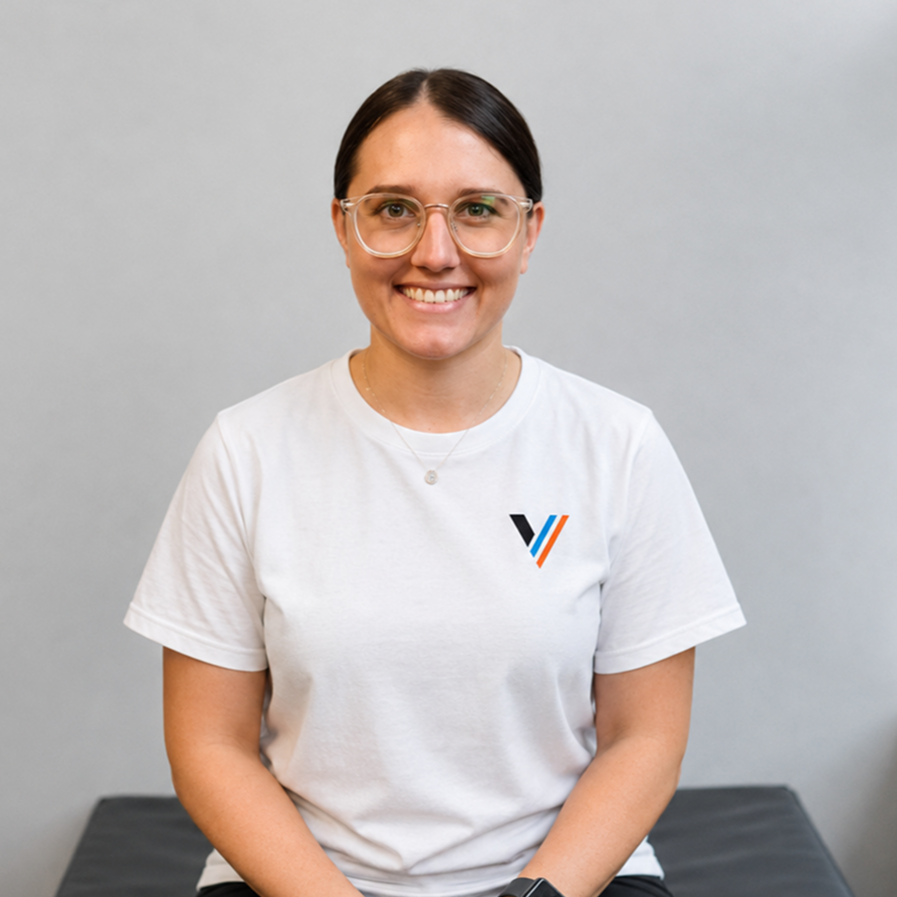
Jess Larder
Physiotherapist
Passionate about rehabilitation, movement, and helping people achieve their goals.
Getting Here
We treat hip replacement patients at both our Norwest and Dural clinics.
Norwest
301/10 Century Circuit NORWEST NSW 2153
Inside Norwest Central Building Complex - 8 - 12 Century Circuit
Entry doors next to Zaatar and Zucchero Cafe
Operating Hours
Mon - Fri 8am - 6pm
Sat 8am - 12pm
Sun CLOSED

Ready to Get Your Hip Working Properly?
We see hip replacement patients from across The Hills, including Dural, Round Corner, Kenthurst, Glenhaven, Castle Hill, Kellyville, Baulkham Hills, Cherrybrook and Bella Vista, at our Norwest and Dural clinics, and in Canberra at Giralang.